
Laodicea (Asia Minor)
"To the angel of the church of Laodicea write" Revelation 3:14
The city of Laodicea is located in the Lycus River valley in modern-day Turkey (see map below). This city held a church that was being "pastored" by John from his home base in Ephesus.
Laodicea is bracketed by two other cities found in the New Testament. Colossae is to the southeast, and Hierapolis is to the north.
Paul, writing his letter to the Colossians, instructs them to share their letter with the church at Laodicea (Col. 4:16) as well as reading the letter he wrote to those at Laodicea (Col. 4:16). Unfortunately, the letter Paul wrote to Laodicea was not retained.
The main point is that these churches are connected by their shared proximity.
The question we ask is - why does John write the following,
Laodicea is bracketed by two other cities found in the New Testament. Colossae is to the southeast, and Hierapolis is to the north.
Paul, writing his letter to the Colossians, instructs them to share their letter with the church at Laodicea (Col. 4:16) as well as reading the letter he wrote to those at Laodicea (Col. 4:16). Unfortunately, the letter Paul wrote to Laodicea was not retained.
The main point is that these churches are connected by their shared proximity.
The question we ask is - why does John write the following,
"I know your deeds, that you are neither cold nor hot.
I wish you were either one or the other!
So because you are lukewarm - neither hot nor cold -
I am about to spit you out of my mouth."
I wish you were either one or the other!
So because you are lukewarm - neither hot nor cold -
I am about to spit you out of my mouth."
Laodicea, Colossae, and Hierapolis

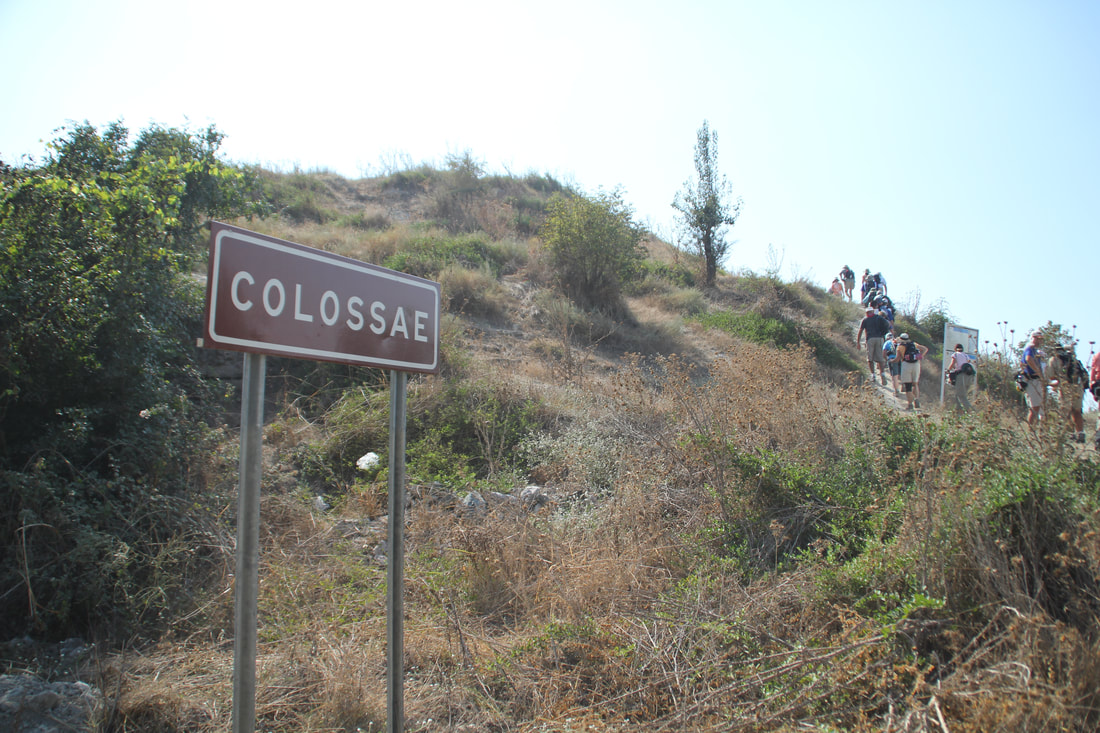


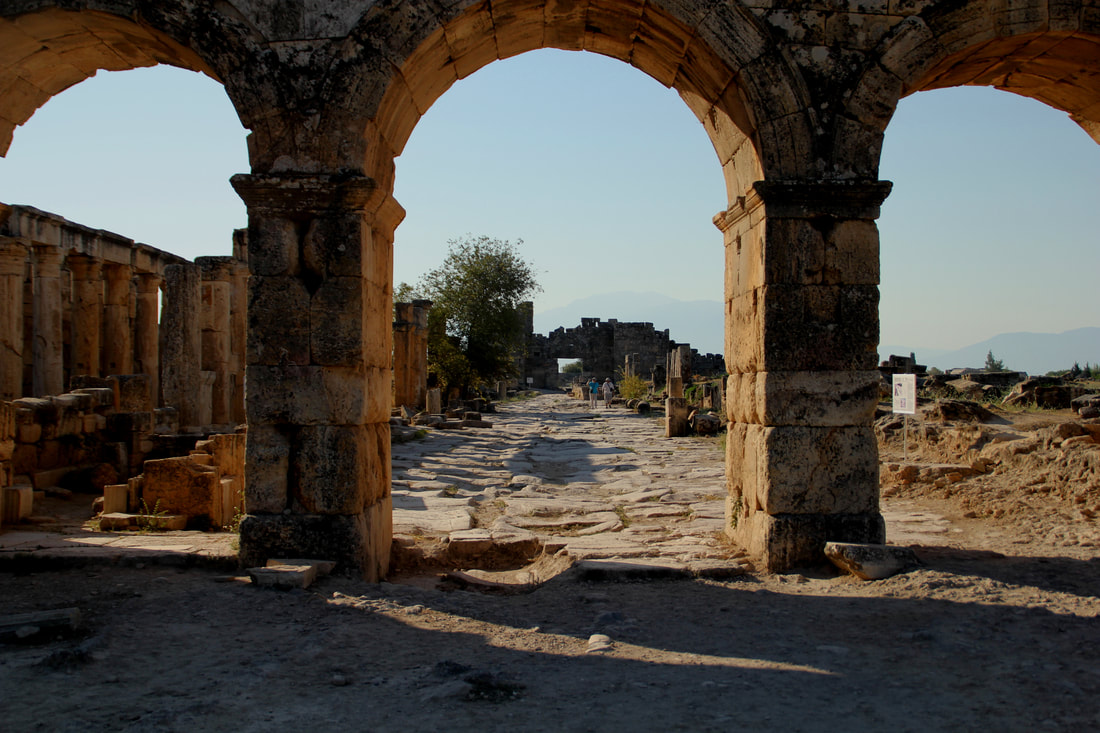
Colossae
Colossae sits close to the foothills of snow-covered mountains.
The area around Colossae is marked by creeks of fresh mountain spring water running off from the snow melt.
In the photo below, you can see the mountain peaks in the background as we walk up to Colossae's ancient site. A fresh, cold water creek was running just to our right as we walked on this road.
The fresh, cold water is good.
The area around Colossae is marked by creeks of fresh mountain spring water running off from the snow melt.
In the photo below, you can see the mountain peaks in the background as we walk up to Colossae's ancient site. A fresh, cold water creek was running just to our right as we walked on this road.
The fresh, cold water is good.
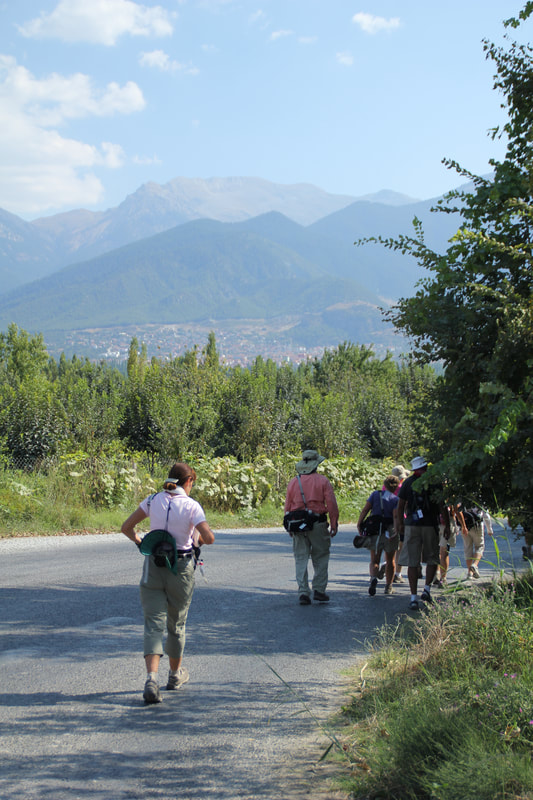
Snow covered mountains feed the Lycus river valley below. Colossae sits on the route of the fresh cold water.
Hierapolis
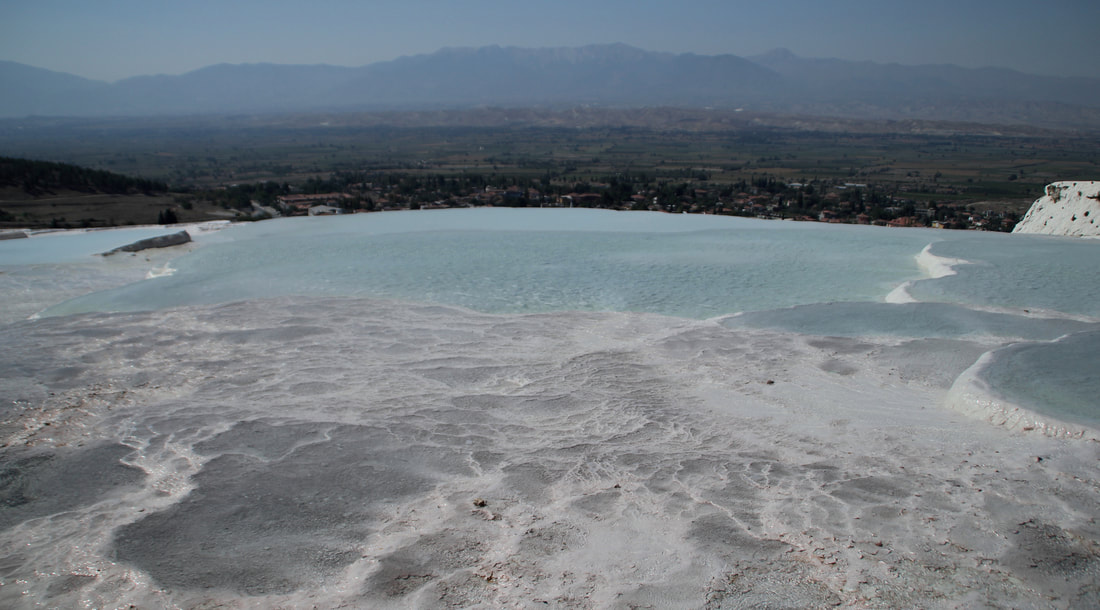
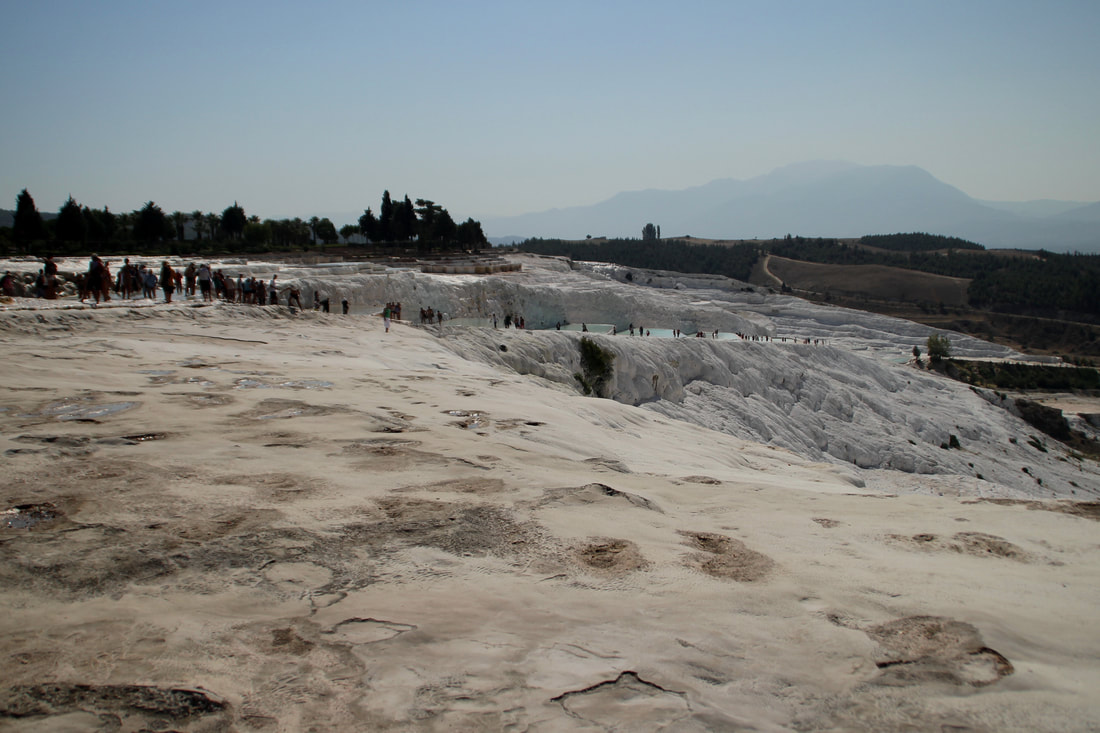
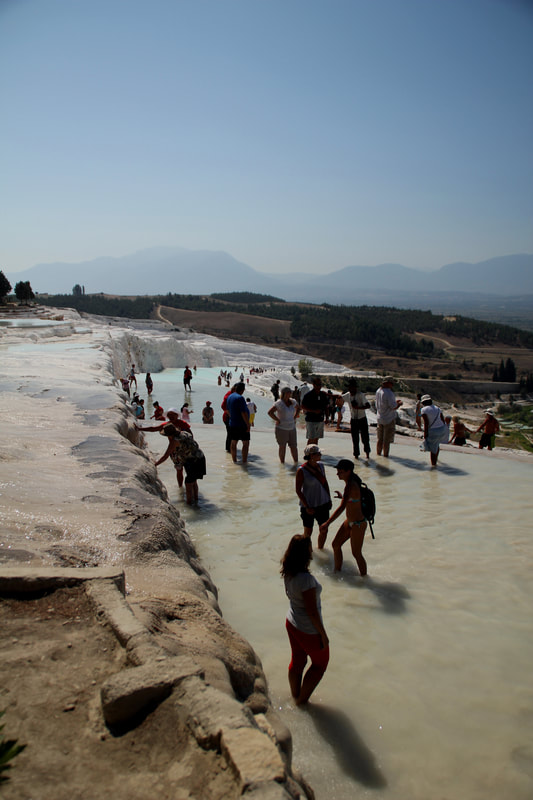
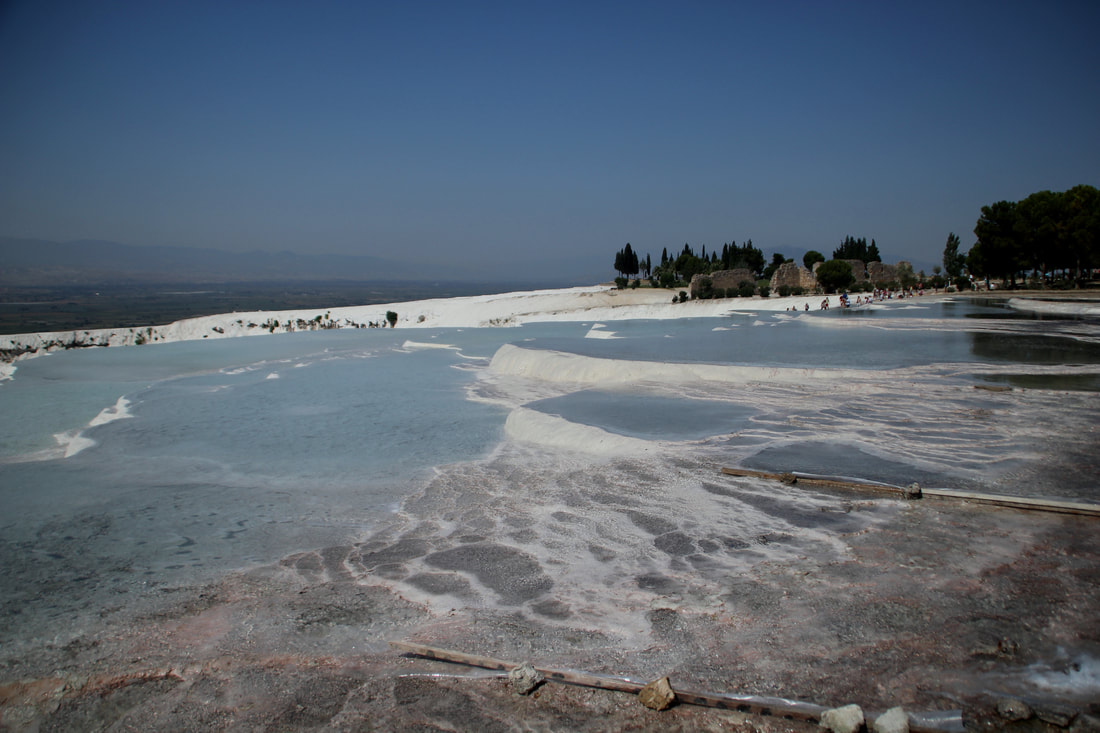
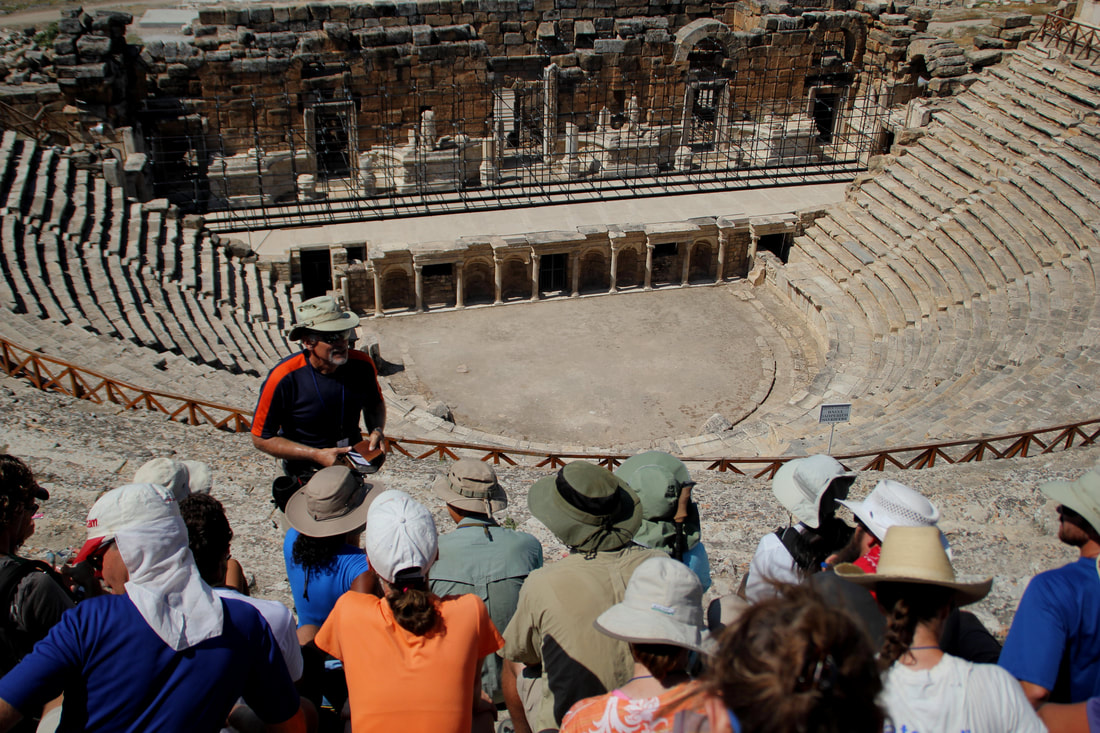
Hierapolis, north of Laodicea, was, and still is, famous for the hot mineral springs that emerge from the hillside. The modern-day city is Pamukkale, full of tourists swimming and relaxing in the spa-like water.
Paul, writing to the Colossians and speaking of Epaphras, says,
Paul, writing to the Colossians and speaking of Epaphras, says,
"I vouch for him that he is working hard for you and for those at Laodicea and Hierapolis" (Col. 4:13)
The hot baths were very popular in Paul and John's day for soothing sore muscles. The Roman soldiers regularly took their leave to relax in this city.
The hot water is good.
The hot water is good.


Laodicea
Laodicea was a wealthy city that minted its own coins.
After a major earthquake hit the region, Laodicea refused to accept money from the Roman government to help rebuild. They wanted to do it themselves.
John writes,
After a major earthquake hit the region, Laodicea refused to accept money from the Roman government to help rebuild. They wanted to do it themselves.
John writes,
"You say, 'I am rich; I have acquired great wealth and do not need a thing" (Rev. 3:17).
Laodicea was famous for was its awful water.
Their water was supplied from a spring miles away, was full of minerals, and tasted terrible. It was good for nothing.
It was neither hot - like Hierapolis - nor cold - like Colossae. It was lukewarm, and John wanted to spit it out of his mouth.
In the photos below, you can see the clogged water pipes from the central fountain of Laodicea.
The water very quickly crusted the pipes inside, and they had to replace or add new ones continually.
Their water was supplied from a spring miles away, was full of minerals, and tasted terrible. It was good for nothing.
It was neither hot - like Hierapolis - nor cold - like Colossae. It was lukewarm, and John wanted to spit it out of his mouth.
In the photos below, you can see the clogged water pipes from the central fountain of Laodicea.
The water very quickly crusted the pipes inside, and they had to replace or add new ones continually.
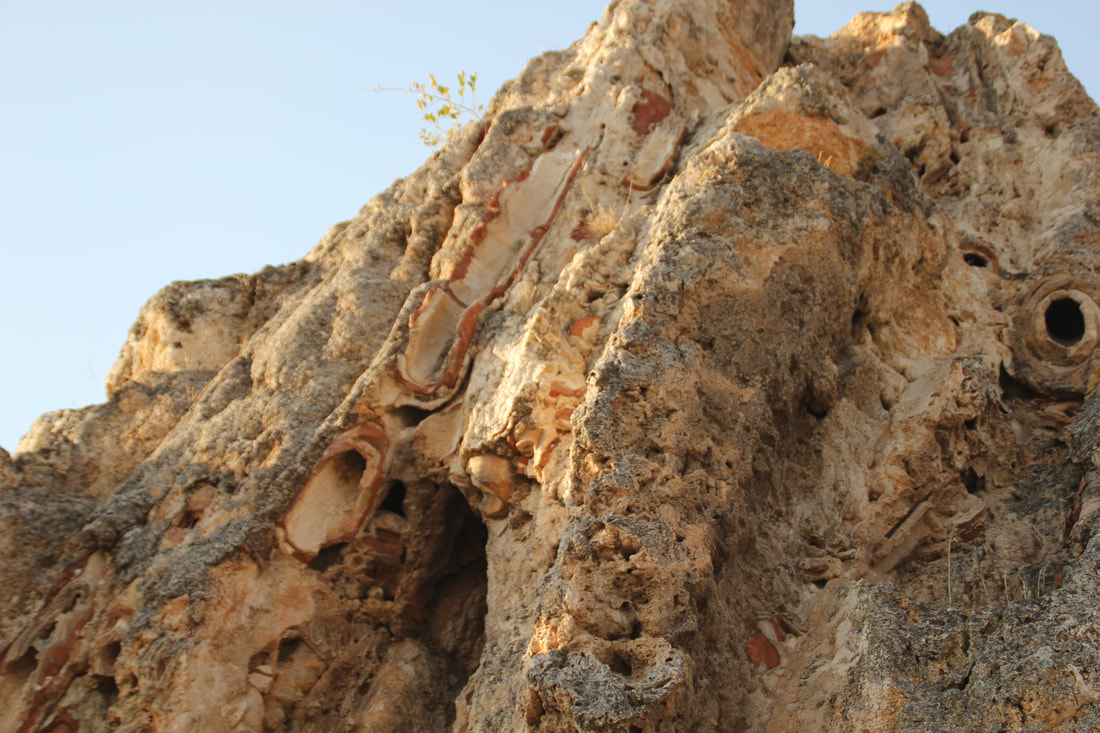
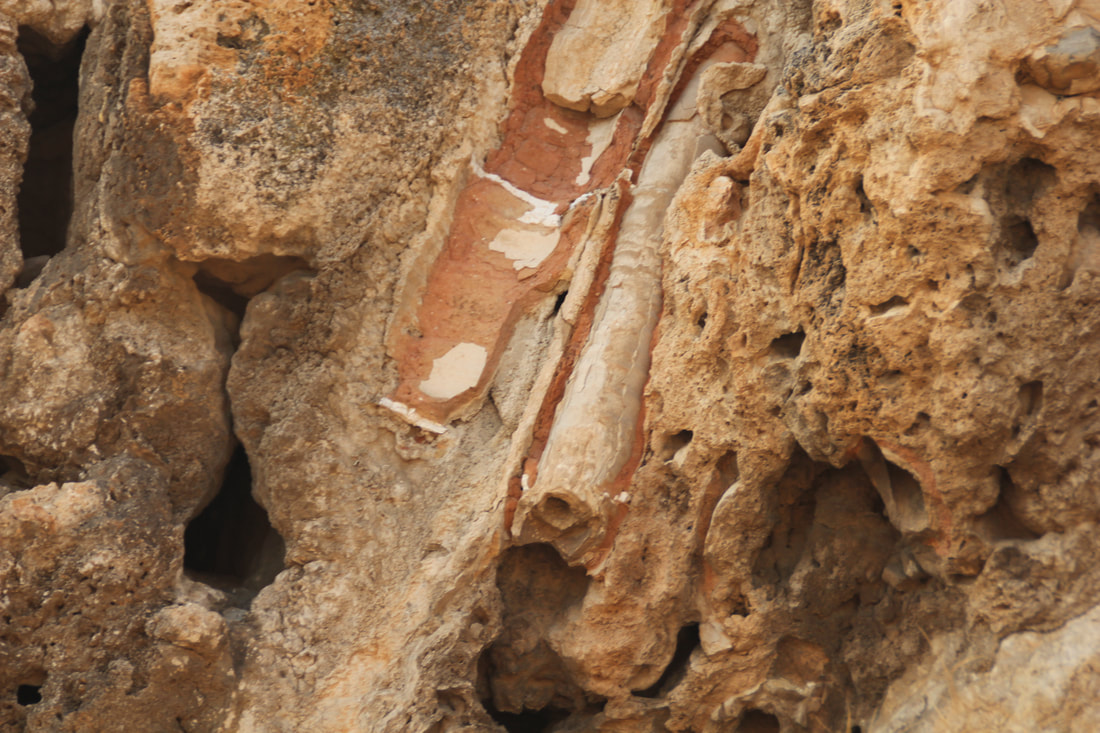

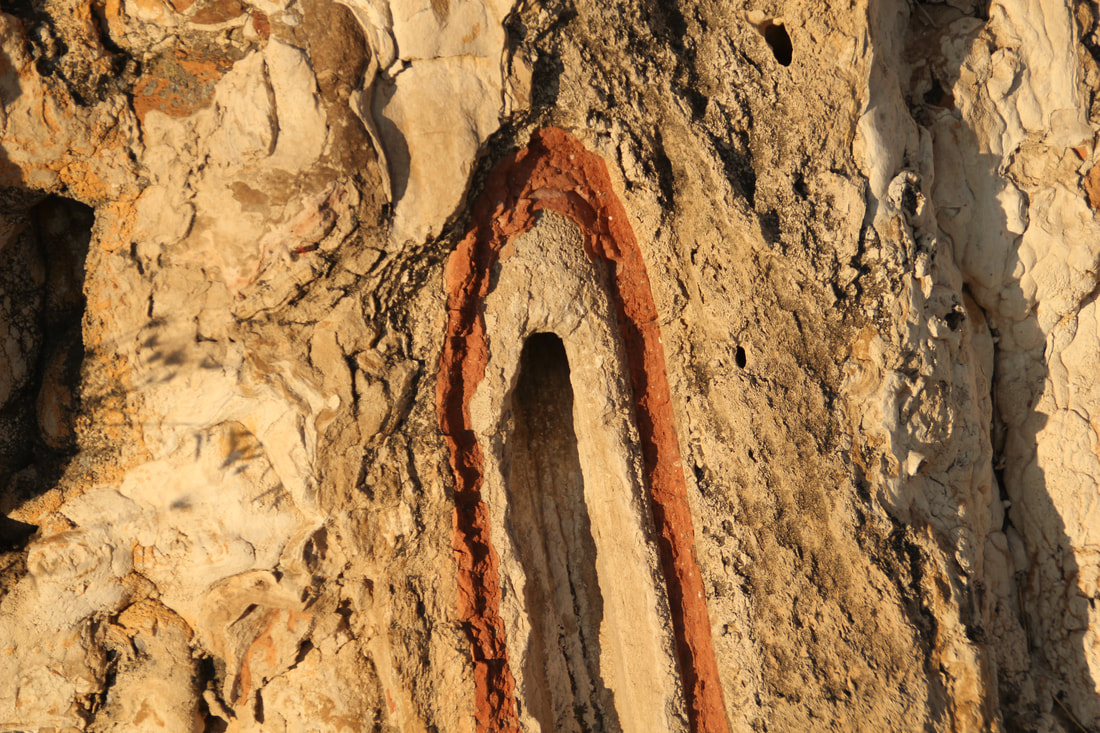
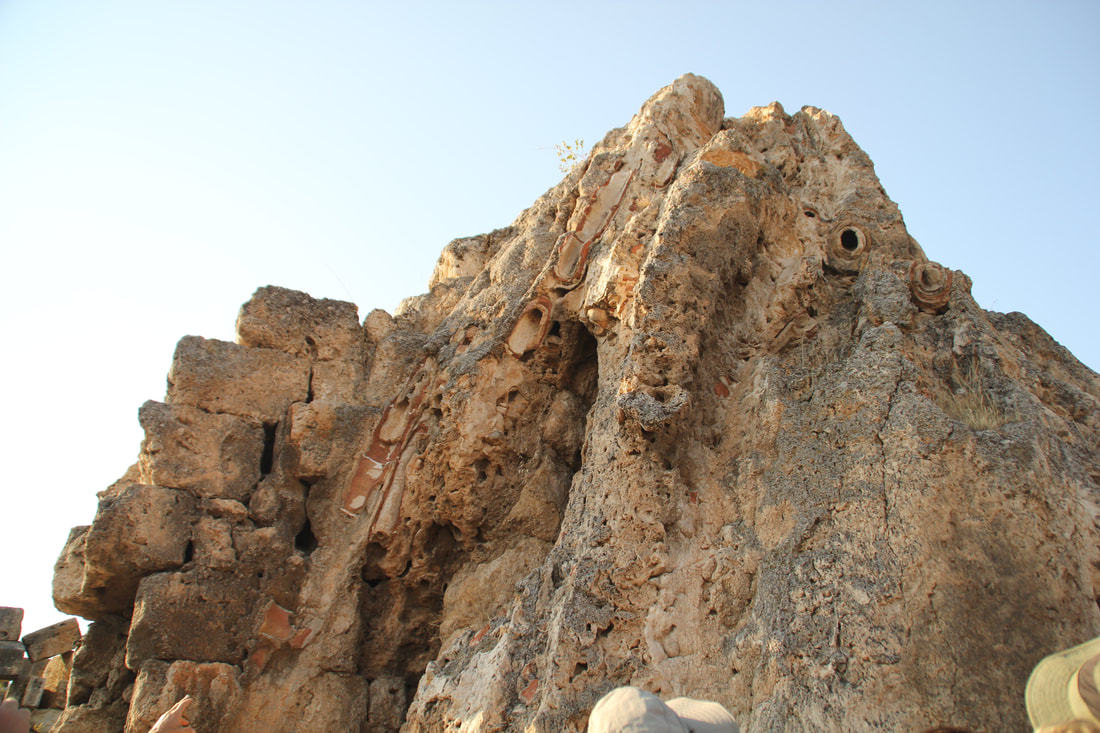
In the book of Revelation, John uses the metaphor of the water found in Laodicea versus that found in Hierapolis and Colossae.
John is speaking to the context of the cities that the people would understand but is also using the text of scripture to enhance his message.
John weaves the message of obedience from Leviticus:
John is speaking to the context of the cities that the people would understand but is also using the text of scripture to enhance his message.
John weaves the message of obedience from Leviticus:
"Even the land was defiled; so I punished it for its sin, and the land vomited out its inhabitants" (Lev. 18:25)
"Keep all my decrees and laws and follow them, so that the land where I am bringing you to live may not vomit you out" (Lev. 20:22)
John is saying to those at Laodicea, "Be good for something!"
Cold water - Colossae - is good. Refreshing. Life-giving.
Hot water - Hierapolis - is good. Relaxing. Invigorating. Renewing.
The water at Laodicea? Rotten. No good. "Lukewarm," and ready to be spit out of your mouth.
A common interpretation is that "cold" is bad and that we should be "hot" for Jesus. This interpretation takes the biblical text out of the original context of Laodicea, Colossae, and Hierapolis and those who read John's letter first.
Like the bad water at Laodicea, being "lukewarm" is bad.
Cold water - Colossae - is good. Refreshing. Life-giving.
Hot water - Hierapolis - is good. Relaxing. Invigorating. Renewing.
The water at Laodicea? Rotten. No good. "Lukewarm," and ready to be spit out of your mouth.
A common interpretation is that "cold" is bad and that we should be "hot" for Jesus. This interpretation takes the biblical text out of the original context of Laodicea, Colossae, and Hierapolis and those who read John's letter first.
Like the bad water at Laodicea, being "lukewarm" is bad.
Travel to Laodicea
Laodicea - modern name Laodikeia, Turkey
AddressP.O. Box 50881
Nashville, TN 37205 |
Email
|
|